
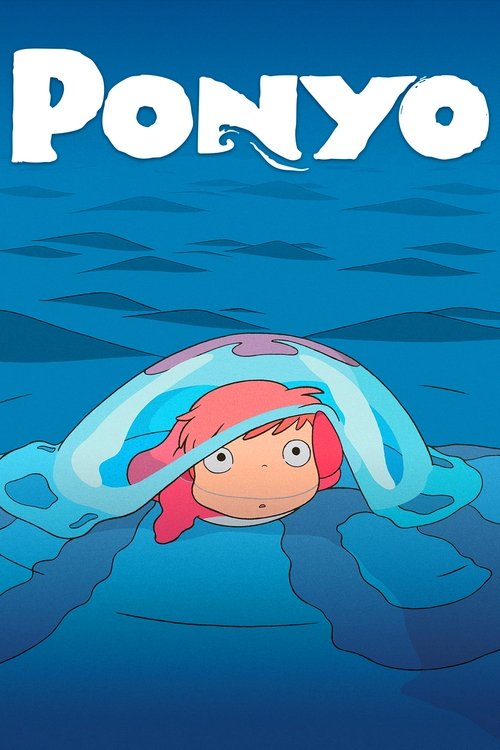
Watch the Official Trailer for Ponyo
Videos
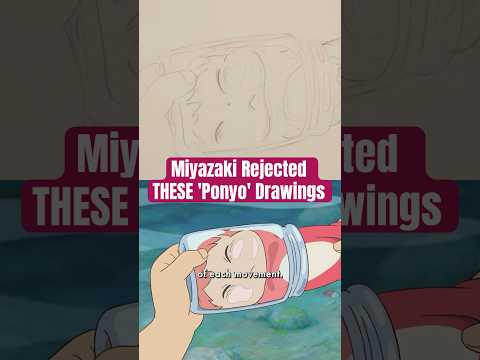 Why Miyazaki Rejected These 'Ponyo' DrawingsFeaturette
 The Animation Desk Behind Miyazaki Films Like 'Ponyo'!Featurette
 This 'Ponyo' Exhibit Lets You Make Your Own Animated Film!Featurette
 Why Studio Ghibli’s Japanese Posters Feel So Different!Featurette
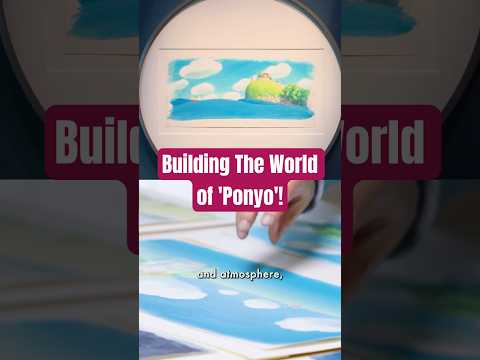 How Studio Ghibli Built the World of 'Ponyo'!Featurette
 How Ponyo’s Unique Animation Style Was Created!Featurette
Storyline
When Sosuke, a young boy who lives on a clifftop overlooking the sea, rescues a stranded goldfish named Ponyo, he discovers more than he bargained for. Ponyo is a curious, energetic young creature who yearns to be human, but even as she causes chaos around the house, her father, a powerful sorcerer, schemes to return Ponyo to the sea.
Ponyo (2008) is a Animation/Family/Fantasy film directed by Hayao Miyazaki. Starring Yuria Kozuki, Hiroki Doi, George Tokoro, Tomoko Yamaguchi. Produced by Studio Ghibli, TOHO, Nippon Television Network Corporation, dentsu, the film runs 100 minutes. Made on a reported budget of $34,000,000, it went on to gross $202,404,009 at the worldwide box office. Fans searching for movies about princess, fish, fairy tale, cliff, mermaid will find plenty to like here. Watch the trailer above, then read the full synopsis, cast list, and audience score below.
Top Cast












Did You Know?
- Ponyo earned back roughly 6 times its production budget at the worldwide box office.
- Ponyo features a large ensemble, with 12 billed cast members on the call sheet.
- Ponyo was a co-production between multiple studios: Studio Ghibli, TOHO, Nippon Television Network Corporation, dentsu.
- TMDB tags Ponyo with the themes: princess, fish, fairy tale, cliff, mermaid, heart warming.
Hayao Miyazaki isn’t a director who plays it safe, and Ponyo — released in 2008 — is proof of what happens when that restlessness meets a strong cast. “Welcome to a world where anything is possible.” That’s the line the studio chose to sell the film, and it doesn’t oversell it by much.
The setup is straightforward enough on paper: When Sosuke, a young boy who lives on a clifftop overlooking the sea, rescues a stranded goldfish named Ponyo, he discovers more than he bargained for. Ponyo is a curious, energetic young creature who yearns to be human, but even as she causes chaos around the house, her father, a powerful sorcerer, schemes to return Ponyo to the sea. The chemistry between Yuria Kozuki and Hiroki Doi, George Tokoro, Tomoko Yamaguchi is doing a lot of the heavy lifting here, and it shows in every shared scene.
It would be easy to watch Ponyo purely for its surface pleasures, but there’s more going on underneath. Ideas around anime, cliff, and fairy tale surface again and again, and they’re handled with more care than you’d expect from a film wearing animation clothing. You can also feel fish and good feeling working in the background, quietly shaping how later scenes land even when they’re not the explicit focus.
The animation, family and fantasy classification undersells it a little. Ponyo uses those elements as a foundation, then builds something more particular on top — a film that’s easy to categorize and a little harder to fully predict.
What Hayao Miyazaki gets right here is restraint: knowing when to let a scene breathe and when to move on, a skill that separates competent animation filmmaking from the kind people actually remember. The rest of the ensemble matters too — George Tokoro, Tomoko Yamaguchi, Yuki Amami all get moments that push the story forward rather than just filling out the frame, which is more than you can say for a lot of films with casts this size.
At 100 minutes, it never overstays its welcome, moving with a confidence that a lot of longer films could learn from. Studio Ghibli, TOHO, Nippon Television Network Corporation, dentsu produced the film, and the polish shows in every frame. The economics alone are worth mentioning: a $34,000,000 budget turned into $202,404,009 in worldwide grosses.
Newcomers to Hayao Miyazaki’s filmography could do a lot worse than starting here; it’s an accessible, confident introduction to what makes the director’s work distinctive. Nearly 18 years on, Ponyo hasn’t lost much of its charge — if anything, it plays better with a little distance. It’s a detail easy to miss on a first viewing of Ponyo, but it rewards anyone paying close attention. That kind of craftsmanship is easy to take for granted until you watch a lesser film try the same thing and fail. Little touches like that are why the film keeps finding new defenders long after its initial release. It’s the sort of small decision that separates a good animation film from a merely competent one. None of it feels accidental — Ponyo is the product of choices made with real intention, and it plays that way from start to finish. That’s ultimately the difference between a film people watch once and one they keep coming back to, and Ponyo lands closer to the latter.
This website uses TMDB and the TMDB APIs but is not endorsed, certified, or otherwise approved by TMDB.