
Watch the Official Trailer for Rashomon
![Rashômon (1950) ORIGINAL TRAILER [HD 1080p]](https://img.youtube.com/vi/Zqoyl2p8_lw/hqdefault.jpg)
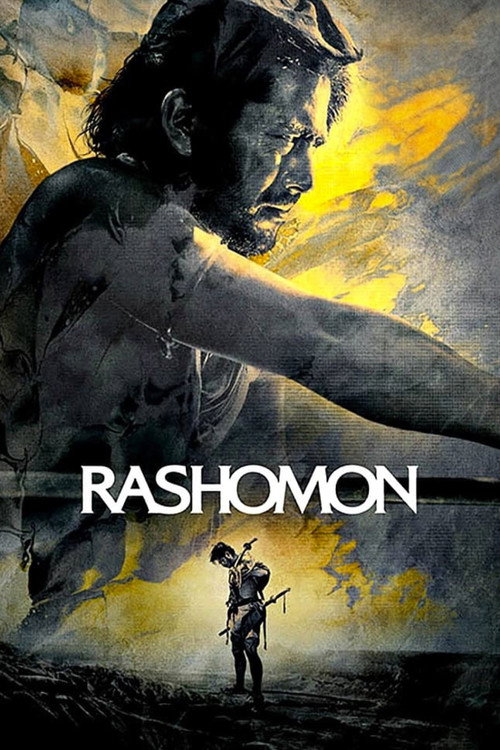
Storyline
Four people recount different versions of the story of a man's murder and the rape of his wife.
Rashomon (1950) is a Crime/Drama/Mystery film directed by Akira Kurosawa. Starring Toshirō Mifune, Machiko Kyō, Takashi Shimura, Masayuki Mori. Produced by Daiei Film, the film runs 88 minutes. Made on a reported budget of $250,000, it went on to gross $117,668 at the worldwide box office. Fans searching for movies about dying and death, japan, samurai, rape, court case will find plenty to like here. Watch the trailer above, then read the full synopsis, cast list, and audience score below.
Top Cast






Did You Know?
- Rashomon did not recoup its reported production budget from box office receipts alone.
- Rashomon clocks in at a lean 88 minutes, shorter than most films in its genre.
- Rashomon features a large ensemble, with 8 billed cast members on the call sheet.
- TMDB tags Rashomon with the themes: dying and death, japan, samurai, rape, court case, court.
There are films you watch once and forget, and then there’s Rashomon — a 1950 crime from director Akira Kurosawa that has kept audiences talking long after the credits roll. You can tell a lot about a movie from its tagline, and “The husband, the wife… or the bandit?” gives away the game in the best way.
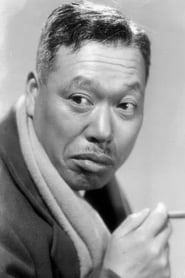
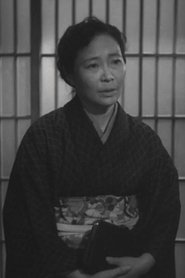
The setup is straightforward enough on paper: Four people recount different versions of the story of a man’s murder and the rape of his wife. Toshirō Mifune anchors the film, backed by a supporting turn from Machiko Kyō, Takashi Shimura, Masayuki Mori that adds real weight to the quieter scenes.
It would be easy to watch Rashomon purely for its surface pleasures, but there’s more going on underneath. There’s a clear preoccupation with court here, and it’s paired with court case in a way that gives the whole thing more staying power than a plot summary suggests. You can also feel japan and rain working in the background, quietly shaping how later scenes land even when they’re not the explicit focus.
On paper, crime, drama and mystery covers the basics of what Rashomon is doing. In practice, the film spends just as much time subverting those expectations as fulfilling them, which is a big part of why it’s held up.
What Akira Kurosawa gets right here is restraint: knowing when to let a scene breathe and when to move on, a skill that separates competent crime filmmaking from the kind people actually remember. It also helps that Takashi Shimura, Masayuki Mori, Minoru Chiaki are given real material to work with; none of them feel like they’re just there to round out a call sheet.
At 88 minutes, it never overstays its welcome, moving with a confidence that a lot of longer films could learn from. Behind the scenes, Daiei Film backed the production, giving Akira Kurosawa the resources to fully realize the vision. The economics alone are worth mentioning: a $250,000 budget turned into $117,668 in worldwide grosses.
Newcomers to Akira Kurosawa’s filmography could do a lot worse than starting here; it’s an accessible, confident introduction to what makes the director’s work distinctive. Love it or merely admire it, Rashomon is hard to walk away from without an opinion — which, for a crime film, is exactly the point. It’s a detail easy to miss on a first viewing of Rashomon, but it rewards anyone paying close attention. That kind of craftsmanship is easy to take for granted until you watch a lesser film try the same thing and fail. Little touches like that are why the film keeps finding new defenders long after its initial release. It’s the sort of small decision that separates a good crime film from a merely competent one. None of it feels accidental — Rashomon is the product of choices made with real intention, and it plays that way from start to finish. That’s ultimately the difference between a film people watch once and one they keep coming back to, and Rashomon lands closer to the latter.
This website uses TMDB and the TMDB APIs but is not endorsed, certified, or otherwise approved by TMDB.