
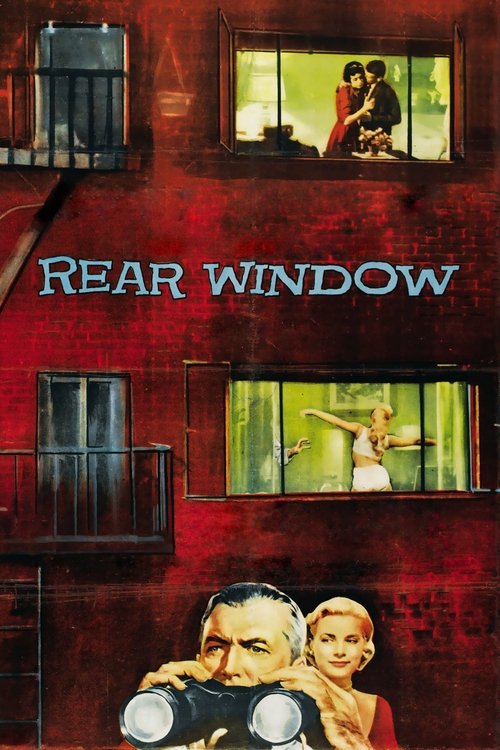
Watch the Official Trailer for Rear Window
Videos

Storyline
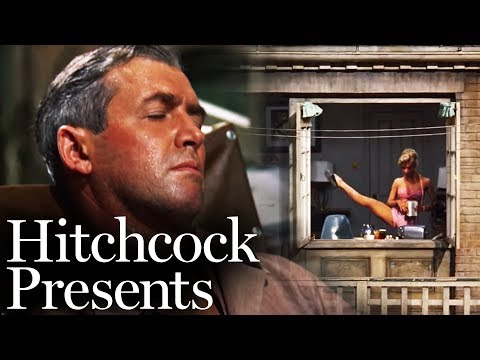
A wheelchair-bound photographer spies on his neighbors from his apartment window and becomes convinced one of them has committed murder.
Rear Window (1954) is a Drama/Mystery/Thriller film directed by Alfred Hitchcock. Starring James Stewart, Grace Kelly, Wendell Corey, Thelma Ritter. Produced by Alfred J. Hitchcock Productions, the film runs 113 minutes. Made on a reported budget of $1,000,000, it went on to gross $37,042,336 at the worldwide box office. Fans searching for movies about nurse, isolation, photographer, suspicion of murder, wheelchair will find plenty to like here. Watch the trailer above, then read the full synopsis, cast list, and audience score below.
Top Cast










Did You Know?
- Rear Window earned back roughly 37 times its production budget at the worldwide box office.
- Rear Window features a large ensemble, with 12 billed cast members on the call sheet.
- TMDB tags Rear Window with the themes: nurse, isolation, photographer, suspicion of murder, wheelchair, girlfriend.
Few things separate a forgettable night of scrolling from a night you actually remember, and “Rear Window” (1954) lands firmly in the second camp for a specific kind of viewer. That reputation, as it turns out, is well earned.
Everything the film wants you to feel is right there in its tagline: “It only takes one witness to spoil the perfect crime.” At the center of it are James Stewart as L.B. Jefferies, Grace Kelly as Lisa Fremont, Wendell Corey as Thomas Doyle, whose choices carry most of the emotional weight from the opening stretch onward. Fans of drama and mystery and thriller stories will recognize the shape of things early, but the execution is confident enough to keep it from feeling like a retread.
It helps to think of it less as a checklist of drama and mystery and thriller tropes and more as a mood the filmmakers commit to fully; once you buy into that mood in the first ten minutes, the rest of the runtime pays it off.
Visually, the film does not need a huge budget to communicate scale — a lot of it comes down to confident blocking and a willingness to let a shot sit a beat longer than expected.
The connective tissue running through the film is built from biting, girlfriend, isolation, neighbor, nurse, and once you notice the pattern it is hard to unsee in almost every sequence.
Further down the call sheet, Thelma Ritter, Raymond Burr, Judith Evelyn round things out, and the film is generous enough with screen time that none of them feel like an afterthought.
Watching it now, years removed from its 1954 release, it holds up better than a lot of its contemporaries, mostly because it was never chasing a trend to begin with.
Alfred Hitchcock’s direction keeps the pacing tight without ever feeling rushed, at 113 minutes, it is paced to respect your time rather than pad itself out, and the performances from James Stewart and Grace Kelly and Wendell Corey sell even the quieter moments, the production values, backed by Alfred J. Hitchcock Productions, hold up scene after scene.
On the numbers side, it was made on a reported budget of $1,000,000 and went on to gross $37,042,336 worldwide — a track record that speaks to how well it connected with audiences beyond just critics.
It is the kind of film people tend to return to specifically because it does not overexplain itself the first time through — there is more to catch once you already know the shape of the story.
None of this is meant to oversell it — it has the rough edges you would expect from a film that is not chasing awards-season polish — but those rough edges rarely get in the way of what it is trying to do. If you catch it streaming somewhere and are on the fence, that is usually enough of a reason to press play.
Bottom line: if drama and mystery and thriller is anywhere near your wheelhouse, “Rear Window” earns a spot on the watchlist. It is not trying to be everything to everyone, and that focus is exactly why it works. Either way, it is a film that rewards patience rather than punishing it.
This website uses TMDB and the TMDB APIs but is not endorsed, certified, or otherwise approved by TMDB.